College football players: pawns or people?
College students shouldn’t be pieces on a chessboard to be moved about by the strategies of the institutions controlling them. College football became the center
College students shouldn’t be pieces on a chessboard to be moved about by the strategies of the institutions controlling them.
College football became the center of debates when the time came for decisions to be made about whether they would compete this fall.
Conferences and programs caved to the pressures of money, authority and fans. Televising the games is a huge money-maker, and institutions rely on those broadcast contracts. Betting is another money market that was factored into the decision.
And of course, there are always the alumni donors to consider.
The decision to play should have been made to protect the health and wellbeing of the players, coaches and staff. Employment of those involved in athletics could have continued with practices, but their salaries were most likely funded from the popularity of the sport. At the Division III level, we can continue to practice because our athletic funding is more tuition-based than Division I programs.
Athletes also pressured their programs to let them play. The athletes of CSB/SJU also had conversations about whether it would be worth the risk to be able to do the things that they love and, to some extent, keep them sane and functioning.
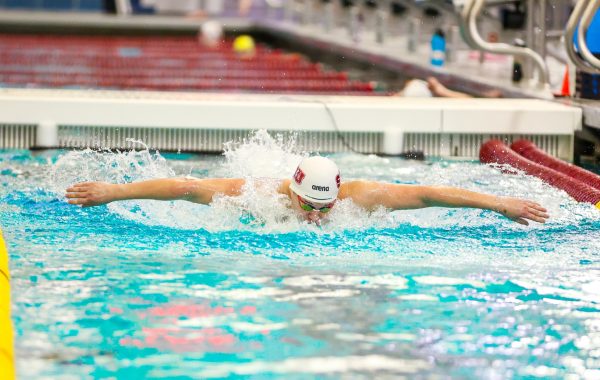
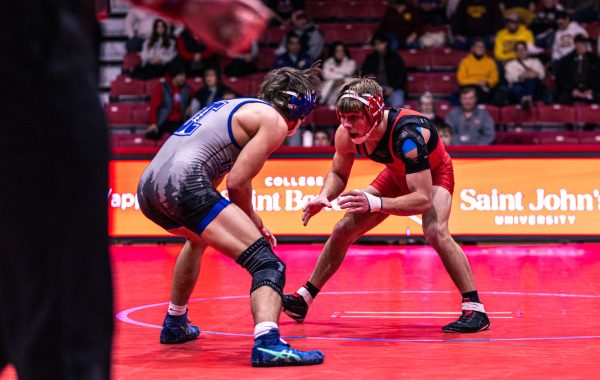
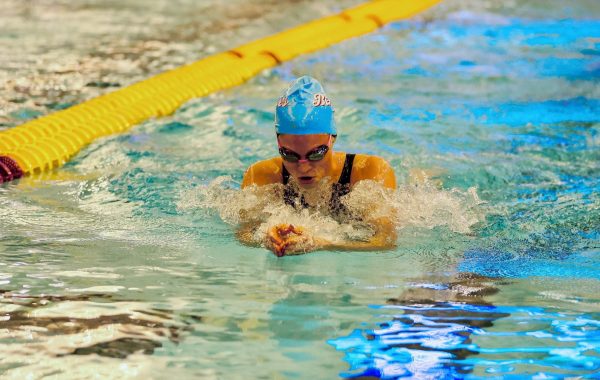
Rightfully, the final decision was not made by the students. For Division III, there was little profit at risk by working to protect students. Evidence of this willingness to sacrifice sports is seen in the NCAA’s postponement of Division II and Division III competition and CSB/SJU’s two-week hiatus for some sports due to off-campus restrictions.
By limiting off-campus involvement, CSB/SJU attempted a “bubble effect.” That is what the NHL and professional basketball leagues did to accomplish playoffs and crown champions.
But college football is not “bubbling.” They can’t make a bubble for college football— not if the athletes are meant to attend classes. They could do classes remotely, but Division I athletic priorities don’t lie in education. If this were true top football programs, such as Clemson and LSU, wouldn’t have graduation rates around 20%.
Teams are travelling and exposing players, staff and outsiders to the spread of the virus. As of two days ago, University of Notre Dame had 39 players tested positive for COVID-19.
The dangers of asymptomatic cases and false-negative tests only further the spread within and between programs.
These players are casualties that were deemed necessary by the decision to allow competition. Sure, the virus doesn’t kill many in the college-age demographic, but it does cause damage.
Research is still emerging, but new studies are finding permanent damage to organs, especially lungs, even in asymptomatic cases. Playing through COVID-19 could damage the future health and abilities of these players.
College football came back too early without enough weight given to health, safety and the education of its players.