When the people making the movie haven’t read the story
One of my all-time favorite books is “Between Shades of Gray” by Ruta Sepetys, released in 2011. It has stayed with me since I first
One of my all-time favorite books is “Between Shades of Gray” by Ruta Sepetys, released in 2011. It has stayed with me since I first read it in sixth grade after my friend recommended it, and I’ve reread it more times than I can count. The story follows Lina Vilkas, a Lithuanian teenager deported with her family under Stalin’s regime, as she is forced from her home and sent across thousands of miles to brutal labor camps near the Arctic Circle. It’s a beautifully written portrayal of survival and resilience. I love to read stories like hers, and if you’re into historical fiction — all of my fellow “I Survived”-fixated kids, stand up! — this book is for you.
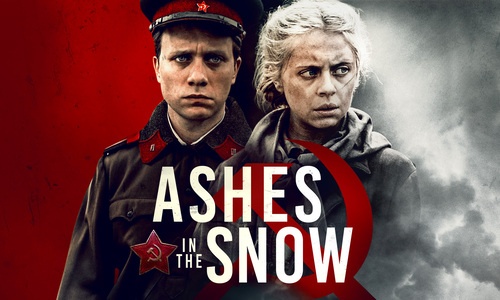
Promotion aside, a movie adaption was quietly released in 2019, called “Ashes in the Snow.” I watched it in my sophomore year of high school, and, to put it frankly, it sucked. Like, really sucked. The acting wasn’t bad; I actually enjoyed the performances. They did their best with the terrible script they were given.
My main issue with the film was that I felt like it focused less on the story of Lina, the main character — the narrator, the protagonist — and instead fixated on plot points that didn’t even exist in the novel, actively getting rid of events in the story that meant a ton to Lina. These gaps in her story refilled by and practically spilling over with unwanted points of view in the movie adaption made me feel less attached to the girl I rooted for every time I read the novel.
Half of the characters that impacted her throughout the book were missing, including (but not limited to) Mrs. Arvydas, Mrs. Rimas and Mr. Lukas. Mr. Stalas, my personal favorite character, appeared on screen for about three seconds towards the beginning of the film and wasn’t shown after that. As a matter of fact, I’m not even fully convinced that it was him, because they didn’t even bother to give him a name: just a blink-and-you’ll-miss-it moment. No development. No dialogue. Not even an acknowledgment of his existence by any of the characters in the movie.
I took that as an insult. It still makes me angry. Grr.
The events in the novel that very well could have happened in the movie were replaced by plot points that made me scrunch my face. The extreme emphasis in the movie placed on the subplot of Nikolai Kretzky, an NKVD guard, was super random and a lot of it was unnecessary. The movie never really bothered to set up his story like they did with Lina, and instead it felt like all of his scenes in the film were just a bunch of filler episodes that could have (and should have) been replaced with scenes of at least some of the missing characters that meant so much to Lina.
Even though the movie gives Kretzky more on-screen attention than the book ever does, I ended up hating him more in “Ashes in the Snow” than in “Between Shades of Gray.” In the novel, I could actually understand his internal conflict. A main struggle of his was dealing with the discomfort he had with the atrocities around him, which he couldn’t do much about because of the pressure to continue to do what the military wanted from him. Now, mind you, all of the information the reader gets about him in the book is from Lina; however, her limited perspective as a political prisoner makes him ambiguous. Is he an enemy upholding cruelty, or an unwilling pawn of the regime just trying to maintain some scrap of humanity? That tension is what made him interesting.
But in the movie, where the camera literally follows him around and the viewers are supposedly allowed a closer look, that complexity disappears. How is it that I can empathize with him more in the book — where everything I know about him is filtered through Lina — than in the movie? Unfortunately, whoever wrote the script clearly never bothered to read his portrayal in the book. They flattened him into a character I could neither understand nor root for, especially concerning a few particular scenes of his in the movie.
Now, I understand that it’s difficult to translate every single moment from a 338-page novel into an hour-and-a-half-long movie. But when you bring forth a movie to audiences based off of a book, with the audience obviously expecting it to be closely related to the book, I don’t believe that it could possibly be that difficult to at least try fit in the important parts, even if you had to get rid of a few scenes. The book is straightforward and tells a story that I think could be made into a movie without much error, especially since World War II-era movies have been done brilliantly in the past (e.g. “Schindler’s List” and “The Pianist”, admittedly both holding a heftier budget), but somehow the filmmakers managed to screw it up.
All in all, if you couldn’t tell already, I hated the movie. It really disappointed me, because the book was brilliant. But unfortunately, it’s a frequent pattern in the film industry that movie adaptations are worse than the books they’re based on. I’m not alone on this opinion: data from a study done by review.org found that, in a survey of over 1100 titles, over 89% of books had higher ratings than their movie adaptions. That includes various titles such as “Harry Potter”, “The Hunger Games”, and “Twilight.”
“Ashes in the Snow” is a brilliant case study that demonstrates one of the major problems with movie adaptions: they tend to stray too far away from the story in favor of adding new plot points to keep the crowd engaged. But it’s important not to be too ambitious and get rid of half of the source material in an effort to entertain an audience, because then nobody will like you and I will write an angry review.
Who knows? Maybe if the filmmakers kept Mr. Stalas in, this review would be a little more positive. But they had their chance during the screenwriting process.